Thailand is easy to get around. Budget flights link Bangkok with the north and the islands in about an hour, sleeper trains run overnight to Chiang Mai, and boats leave for the islands from piers all along both coasts. In Bangkok the trains beat the traffic. The one thing to treat with care is the road: Thailand has one of the highest rates of road deaths in the world. Here is how each way of getting around works, what it costs and when it makes sense.
What do you need to enter Thailand?
The rules changed on 15 September 2026. Visitors from 60 countries and territories, including the UK, Ireland, the US, Canada, Australia, New Zealand and most of the EU, can now stay up to 30 days without a visa for tourism. This replaces the 60-day exemption that ran from July 2024. Visa-free visitors entering by land are limited to two entries per calendar year. Travellers from countries not on the new list need a visa, applied for through the official Thai e-Visa website.
Every foreign visitor must also fill in the Thailand Digital Arrival Card (TDAC) online within three days before arrival. It is free on the Immigration Bureau's website, so ignore sites that charge a fee. Your passport needs more than six months' validity, and you may be asked for proof of accommodation, funds and an onward ticket.
How do you get from the airport into Bangkok?
Bangkok has two airports. Suvarnabhumi (BKK) handles most long-haul flights plus Thai Airways and Bangkok Airways. Don Mueang (DMK), north of the city, is the base for the budget airlines. Check which one your ticket uses, especially if you are connecting.
| Route | Option | Cost | Time |
|---|---|---|---|
| Suvarnabhumi | Airport Rail Link to Phaya Thai | 45 baht | About 30 min |
| Suvarnabhumi | Metered taxi or Grab | About 400–575 baht with tolls | 45–60 min |
| Don Mueang | SRT Red Line to Bang Sue | About 33 baht | About 20 min |
| Don Mueang | A1–A4 airport buses | 30–50 baht | Depends on traffic |
The Airport Rail Link runs from about 5.30 am to midnight, every 10 to 15 minutes, and accepts contactless Visa and Mastercard. Taxis from the official rank add a 50-baht airport surcharge to the meter, and you pay the expressway tolls. Ignore touts inside the terminal.
Phuket Airport is about 40 km from Patong. The Phuket Smart Bus costs 100 baht and takes about 90 minutes. A taxi takes about an hour and costs around 700 to 900 baht, including the 100-baht airport fee.
How do you get around Bangkok?
Use the trains. The BTS Skytrain and the MRT underground avoid the traffic and cover most places visitors go. Single BTS fares run from about 17 to 65 baht, and the MRT Blue Line from 17 to 44 baht. The BTS runs from about 5 am to 1 am and the MRT Blue Line from about 6 am to midnight.
- Paying on the MRT: tap a contactless Visa or Mastercard at the gate.
- Paying on the BTS: bank cards do not work at the gates. Buy a ticket or a Rabbit card, or a 150-baht One-Day Pass.
- River boats: the Chao Phraya Express Boat links the Grand Palace, Wat Arun and the old town with the BTS at Saphan Taksin. The orange-flag boat costs 19 baht.
A capped fare across the lines has been announced for 2027 but was not in force when we checked.
Are taxis, Grab and tuk-tuks safe?
Metered taxis are generally safe and cheap. Insist on the meter and find another taxi if the driver refuses. Grab is widely used for cars and taxis; check that the plate number and driver's name match the app before you get in.
Tuk-tuks, motorbike taxis and unmetered taxis have no meter, so agree the fare and route before you get in. Be wary of friendly drivers offering cheap tours: they often stop at gem or tailor shops that pay commission. If something goes wrong, call the Tourist Police on 1155.
Should you take domestic flights?
For long distances, yes. No airport in Thailand is more than about 75 minutes' flying time from Bangkok, and fares are often low. AirAsia, Nok Air and Thai Lion Air fly from Don Mueang; Thai Airways and Bangkok Airways fly from Suvarnabhumi. Budget fares often exclude checked bags, so add them online, where they cost far less than at the airport.
Koh Samui's airport is owned by Bangkok Airways, and only Bangkok Airways and Thai Airways fly there direct, so fares are higher than on other routes. Foreign passengers must show their passport on domestic flights.
Is the train a good way to travel?
The State Railway of Thailand (SRT) is slow but comfortable, and the overnight sleeper to Chiang Mai is a classic trip. Long-distance trains now leave from Krung Thep Aphiwat Central Terminal, which opened in January 2023 and connects with the MRT Blue Line and the Red Line to Don Mueang. The old Hua Lamphong station still serves a few local trains.
Four sleepers run to Chiang Mai each day. Train 9 leaves at 18:40 and arrives at 07:15, using the newest carriages. A second-class air-conditioned berth costs from about 770 to 1,040 baht, and first-class cabins from about 1,250 baht per person. Book on the SRT's D-Ticket website up to six months ahead. First class sells out fast, and every train fills up around New Year and Songkran.
Can you travel around Thailand by bus?
Buses go almost everywhere and are cheaper than the train. Bangkok has three main terminals. Mo Chit, the Northern terminal, serves Chiang Mai, Chiang Rai and the north-east. Ekkamai, the Eastern terminal, serves Pattaya, Rayong for Koh Samet, and Trat. The Southern terminal serves Hua Hin, Surat Thani, Phuket and Krabi. Minivans cover shorter routes such as Ayutthaya.
How do you get to the islands?
Most island trips combine a flight, bus or train with a boat. Combined tickets are sold for the whole journey.
- Koh Samui, Koh Phangan and Koh Tao: fly to Samui, or take a bus or train to Surat Thani and a ferry from Donsak. The Raja car ferry to Samui costs 250 baht and takes about two hours. Bus and ferry from Bangkok takes about 10 to 12 hours, from around 600 baht.
- Phi Phi: from Rassada Pier in Phuket, the big ferry takes about two hours and costs around 600 baht; a speedboat takes about an hour for 850 to 900 baht. There is a 20-baht pier fee, and a 400-baht national park fee for Maya Bay.
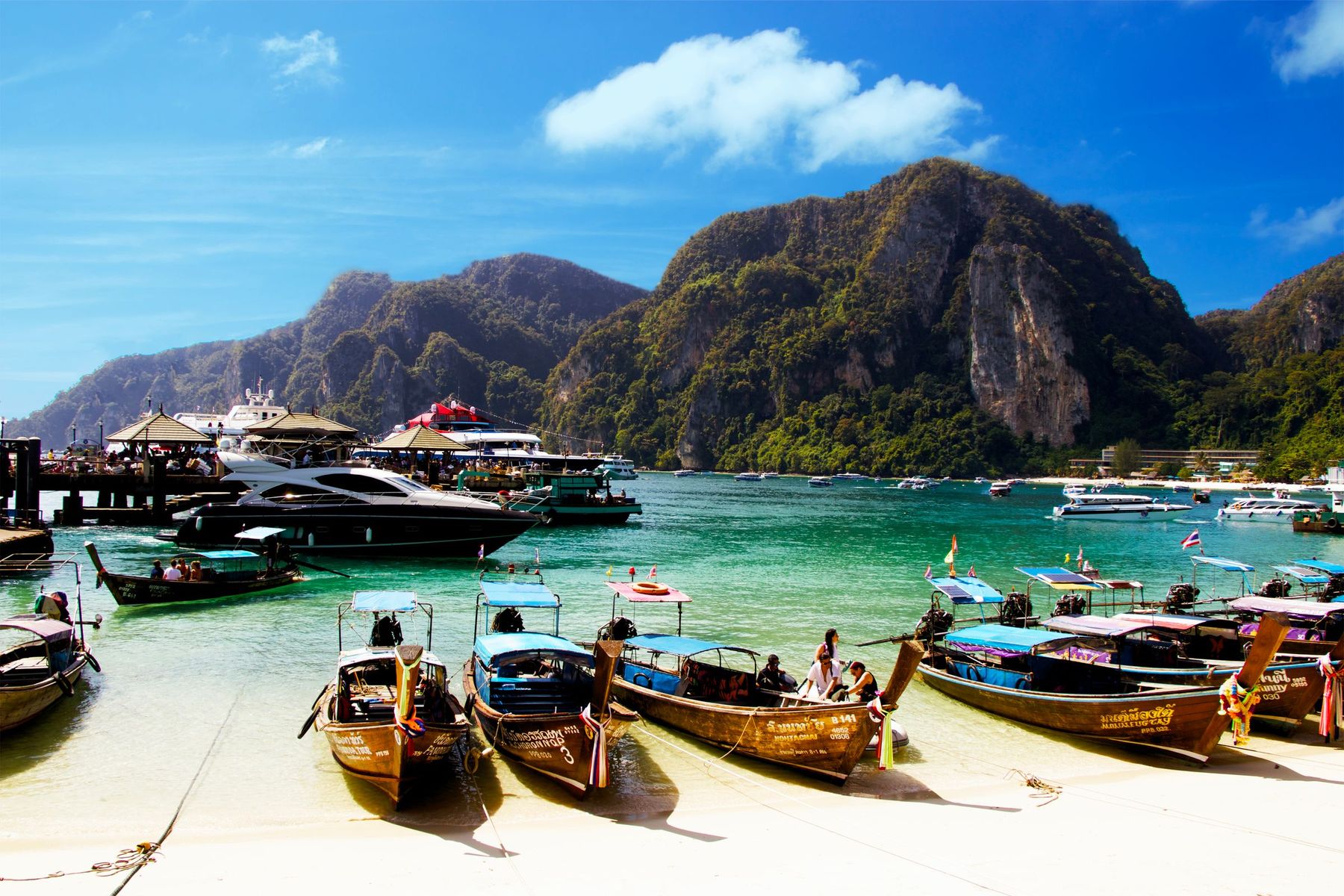
- Longtail boats: the narrow wooden boats with an engine on a long shaft are used for short hops between beaches and nearby islands. Agree the price before you set off.
From May to October the Andaman Sea is rough, and some departures, particularly speedboats, are cancelled. The big ferries are the steadier choice then. Ferries and speedboats have had serious accidents involving tourists, so do not board if the boat or the sea looks unsafe.
Should you rent a car or a scooter?
A car can be useful in the north, around Chiang Mai, or for touring Phuket and Krabi, but think hard before renting a scooter. Motorcyclists are the road users most at risk, and alcohol is often involved.
- Drive on the left. Drivers must wear a seat belt.
- Licence: you need an International Driving Permit as well as your own licence. To ride a motorbike, both must cover motorcycles, whatever the rental shop says.
- Helmets: required by law for riders and passengers. Rental shops rarely provide good ones.
- Insurance: many rental firms have none, and travel insurance often excludes motorbikes or riding without the right licence. Check both before you ride.
- Never hand over your passport as a deposit for a scooter or jet ski.
After an accident, police may hold you until compensation is agreed, which can cost thousands. If you are not covered and not licensed, take Grab, a taxi or a driver for the day instead.
Facts checked October 2026. Visa rules changed on 15 September 2026 and may change again; check the Thai e-Visa and Immigration Bureau websites before you travel. Fares, train times and ferry schedules change by season and operator, so confirm them when you book.
Sources
- Thailand reduces visa-free stay from 60 to 30 days (Khaosod English)
- Thailand travel advice: entry, road safety, taxis and boats (Smartraveller)
- Bangkok airport transfer guide (Wego)
- Bangkok metro guide: BTS, MRT and Airport Rail Link (Portail Asie)
- Train travel in Thailand (The Man in Seat 61)
- Ferry from Phuket to Phi Phi (Phuket 101)