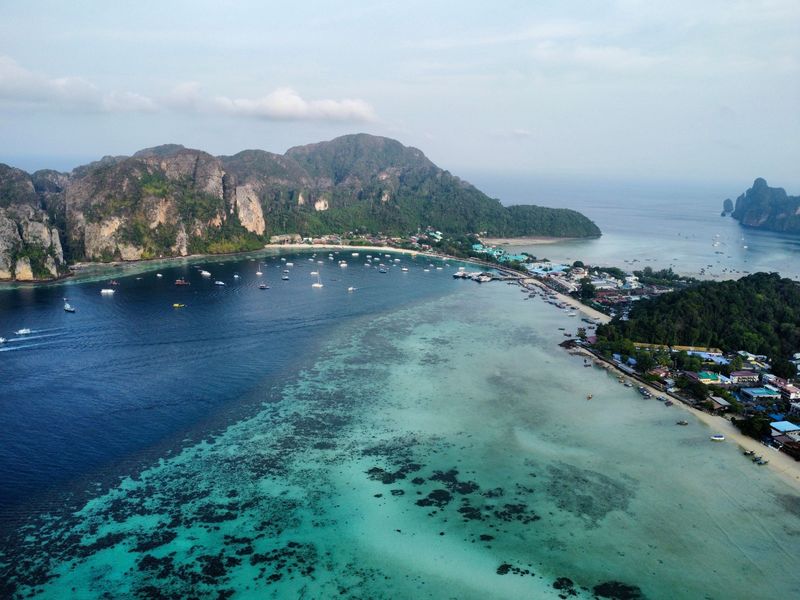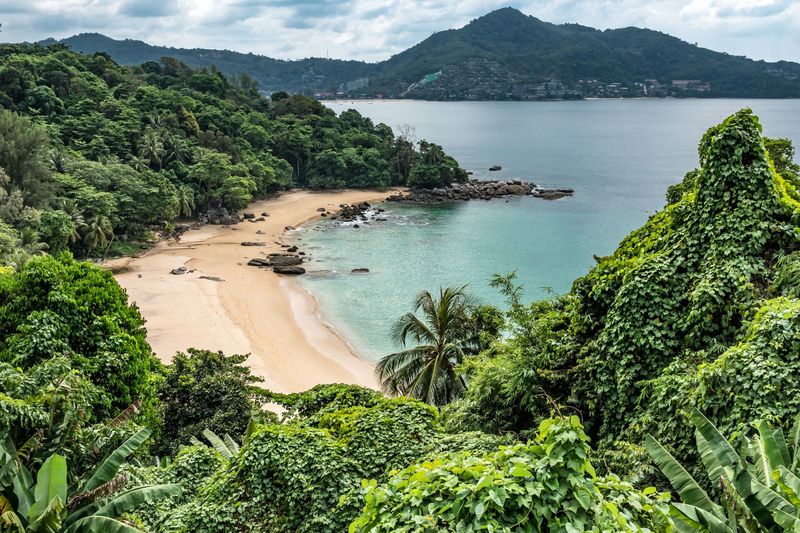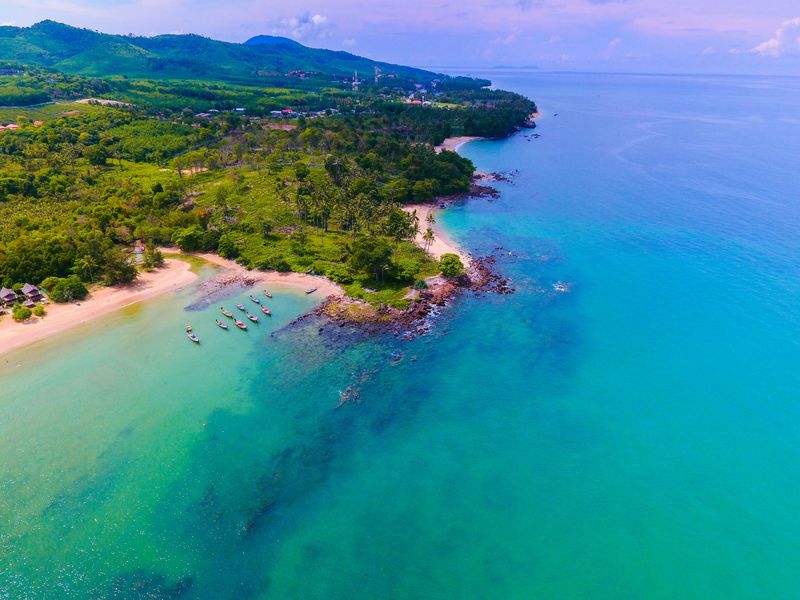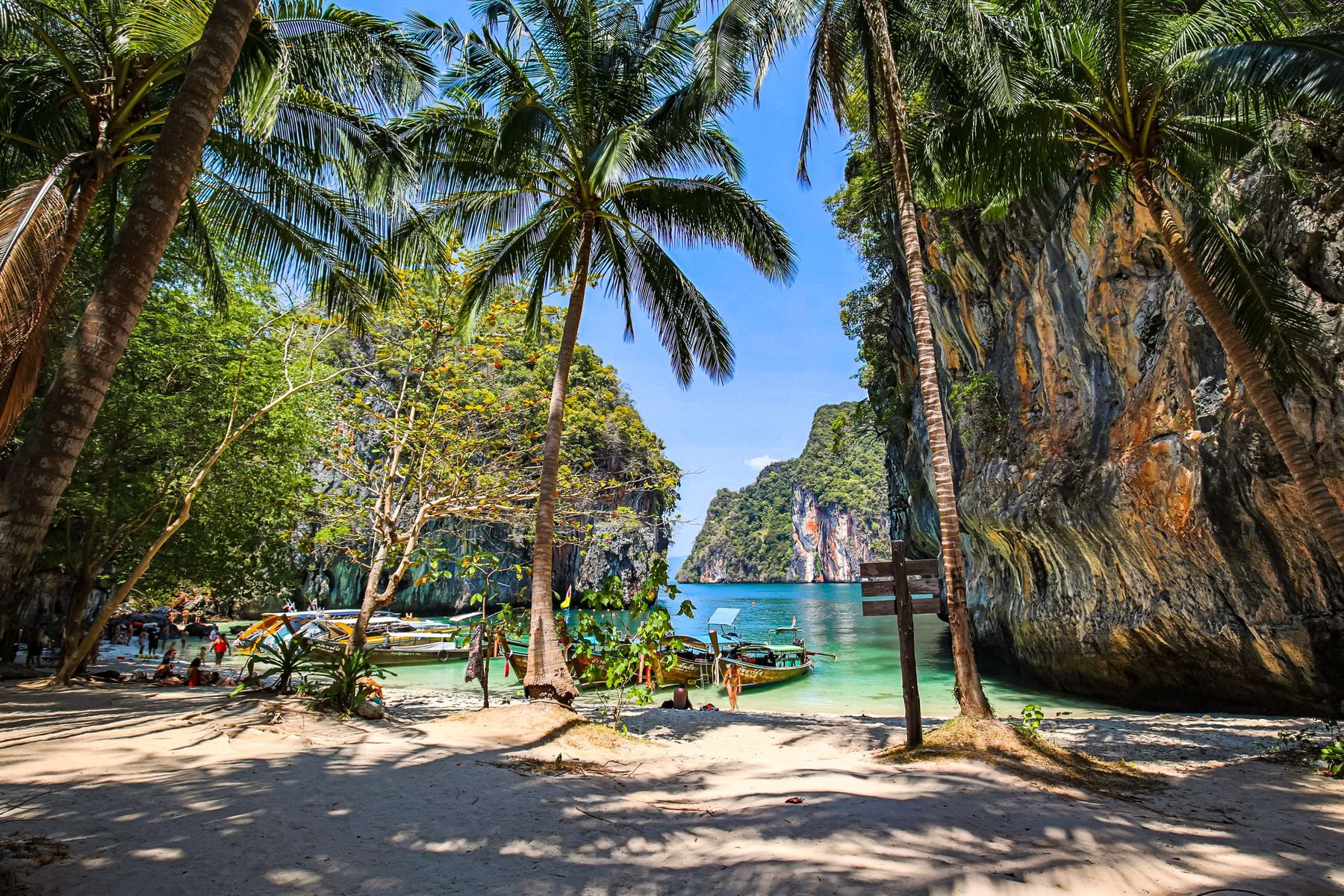
Krabi is not an island. It is a stretch of mainland coast in Krabi province, known for limestone cliffs rising out of the sea and dozens of islands just offshore. Railay, the best-known part, is a peninsula cut off by cliffs, with no roads or cars, so you arrive by longtail boat. Ao Nang, the main beach town, has the most rooms and boat trips. The area suits climbers, island hoppers and anyone who wants scenery more than nightlife. It suits less well if you want a good swimming beach on your doorstep in Ao Nang, where most swimming is done after a boat ride.
Where should you stay in Krabi and Railay?
| Area | What it is like | Best for | From Krabi airport |
|---|---|---|---|
| Ao Nang | The main resort town, with the most rooms and restaurants; boats leave from the beach | First visits, island trips | 35–45 min by road |
| Nopparat Thara | The long beach past Ao Nang's headland, with soft sand, trees and fewer bars | Families, calmer evenings | Just beyond Ao Nang |
| Railay | A car-free peninsula of cliffs and four beaches; rooms sell out first in high season | Scenery, climbing, couples | To Ao Nang, then a 10–15 min longtail |
| Tonsai | The climbers' bay next to Railay; basic rooms on generator power, no ATM | Climbing, low budgets | Longtail from Ao Nang or Nopparat Thara |
| Klong Muang | A quiet line of four- and five-star resorts facing the islands, with no strip | Families, resort stays | About 45 min |
| Krabi Town | A river town with markets and cheap food; no beach | Budget, first or last night | About 12 km |
What are Railay's beaches like?
- Railay West: the main swimming beach, facing the sunset. Longtails from Ao Nang land here, so swim at either end, away from the boats.
- Railay East: mangrove and mudflat, not a swimming beach. It has cheaper rooms, bars, climbing schools and a floating pier for boats from Krabi Town and Ao Nam Mao. It is about five minutes' walk from Railay West.
- Phra Nang: at the southern tip, with clear water and the Princess Cave shrine. Tour boats crowd it from about 11am to 3pm, so go before 10am or late in the afternoon.
- Tonsai: the next bay north, a 15–20 minute jungle walk from Railay West, or along the rocks at low tide.
How do you get to Krabi and Railay?
Flights from Bangkok's Suvarnabhumi and Don Mueang airports take about 90 minutes. Check which Bangkok airport your ticket uses, as they are far apart. Overnight buses from Bangkok take about 15 and a half hours. The cheapest route is a train to Surat Thani and a minivan on to Krabi, which takes 12 hours or more.
From Krabi airport, shared vans to Ao Nang cost about 150–200 baht a seat and take 35–45 minutes. A taxi costs about 700–1,000 baht. Minivans link Krabi and Ao Nang with Phuket in about two to three and a half hours.
To reach Railay:
- From Ao Nang: shared longtails to Railay West cost 100 baht one way, take 10–15 minutes and leave when about eight passengers have gathered, roughly 8am to 6pm. Expect a knee-deep wade at both ends. In rough seas or at low tide, boats may leave from Nopparat Thara instead.
- From Ao Nam Mao: speedboats run every 30 minutes from 8am to 6pm to Railay East's floating pier, for 150 baht. This is the steadiest crossing in rough weather and runs year-round.
- From Krabi Town: shared longtails from Chao Fah pier take about 45 minutes and have no fixed timetable.
Ferries to Koh Phi Phi leave from Klong Jilad Pier near Krabi Town, Nopparat Thara and Railay East.
How do you get around?
Songthaews run between Ao Nang and Krabi Town, taking 25–30 minutes and costing 60 baht by day and 80 baht after 6pm. Klong Muang has no reliable public transport, so use resort shuttles, Grab or taxis. Railay and Tonsai are on foot only.
What are the best things to do?
- Climb. Railay and Tonsai have more than 700 bolted routes, from beginner slabs to hard overhangs. Half-day beginner courses cost about 1,500 baht with gear, and no experience is needed.
- Hike to the viewpoint. The trail starts on the path between Railay East and Phra Nang and climbs a red-mud slope with fixed ropes for 10–20 minutes. Beyond it, a harder route drops to the Sa Phra Nang lagoon. Only try it in dry weather, in shoes with good grip.
- Take the Four Islands trip. Tours from Ao Nang usually visit Phra Nang Cave beach, Koh Tub and Koh Mor (joined by a sandbank), Koh Poda and Chicken Island.
- Visit the Hong Islands. About 30–40 minutes from Ao Nang by longtail, with a lagoon inside a ring of cliffs. Go early, before about 9.30am, to beat the crowds.
- Go to Koh Phi Phi. Speedboats from Ao Nang take under an hour.
When is the best time to visit?
The dry season runs from November to April. January and February are the driest months. The rainy season runs from May to October, with the most rain around September and October. Swell on the Ao Nang side can delay or cancel longtails then, so the Ao Nam Mao speedboat is the safer way into Railay. Island tours still run in the rainy season.
What should you know before you go?
- Bring cash to Railay. There are only a few ATMs on the peninsula and none at Tonsai. Thai ATMs charge foreign cards about 250–350 baht a withdrawal.
- Budget for park fees. The Four Islands trip carries a national park fee of 200 baht for adults and 100 baht for children, paid in cash. The Hong Islands fee is 300 baht for adults and 150 baht for children. Tours often do not include them.
- Expect basic power at Tonsai. Generators mean daytime power cuts, cold water and mostly no air conditioning.
Tip: stay in Ao Nang for the widest choice and easiest island trips, then spend a night or two in Railay to see the cliffs after the day-trippers leave.
Facts checked October 2026. Boat times and fares are approximate and change with the tide, weather and season; check before you travel. National park fees are set by the park and can change.
Sources
Discover Thailand · Islands Edition
Every island, in one book.
The Islands Edition covers the Andaman and Gulf islands in depth, with ferry routes, beach maps and which coast to pick in each month. Leave your email and we will tell you the day it launches.
Notify me at launch